Loft Conversion Peterborough
Master Roofing And Home Maintenance > Loft Conversion
Loft Conversion
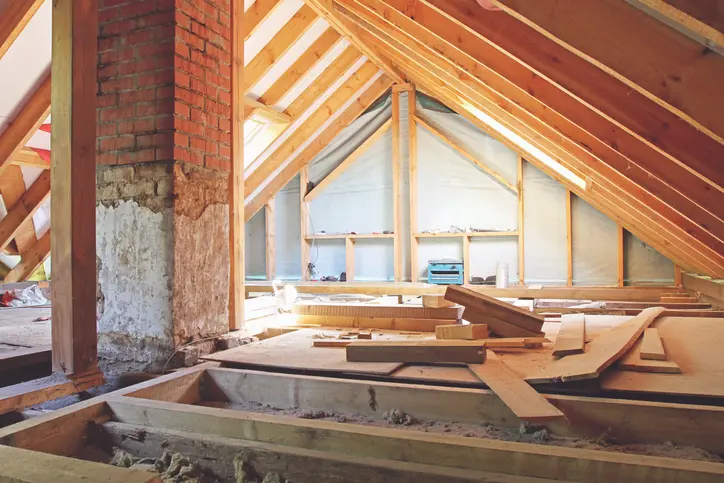
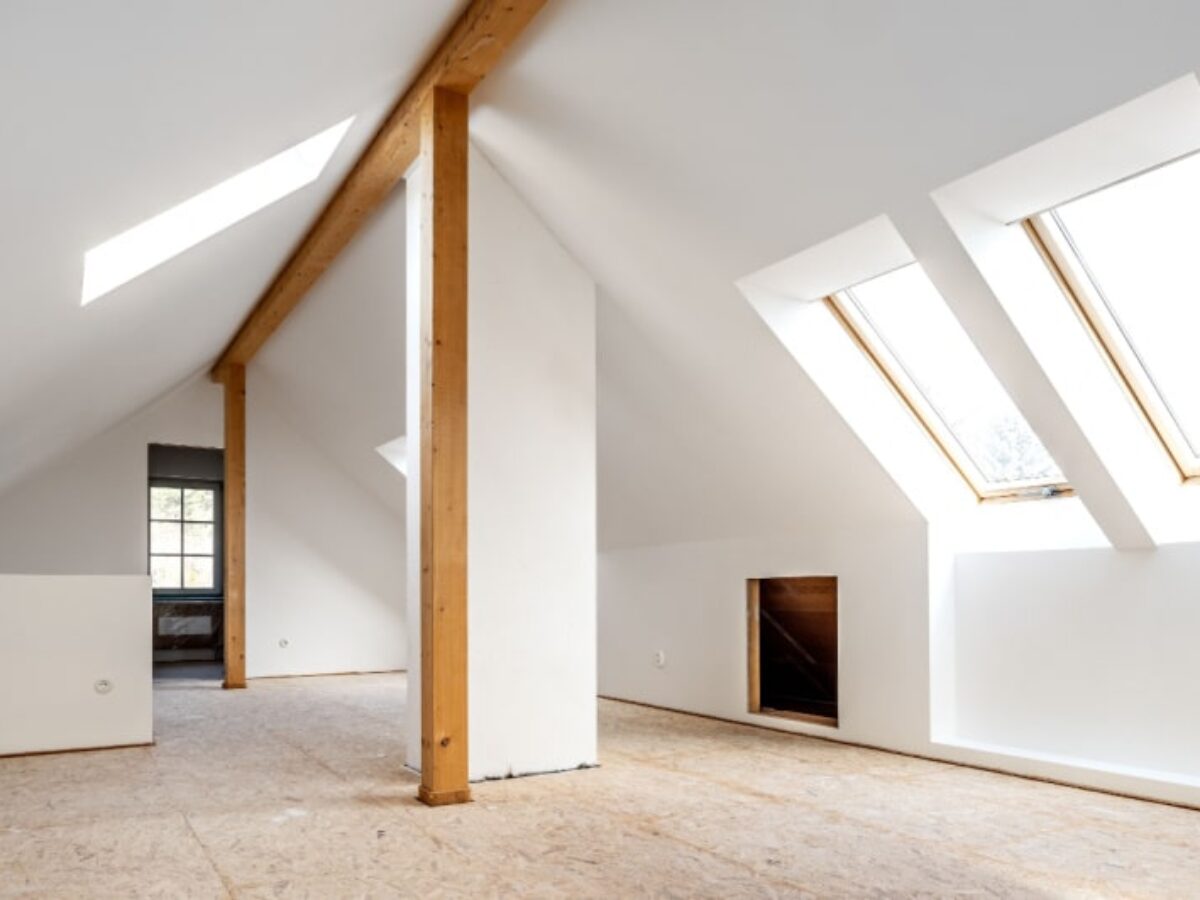
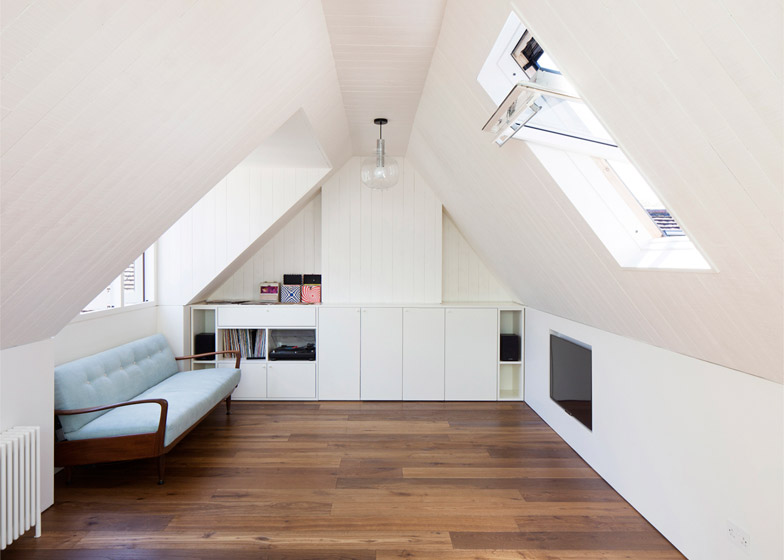
Unlock the hidden potential of your home with a bespoke loft conversion by Master Roofing And Home Maintenance. With our expertise and attention to detail, we transform underutilized attic spaces into stylish and functional living areas, adding value and versatility to your property.
Our skilled team of professionals takes care of every aspect of the conversion process, from initial design consultations to the final touches of craftsmanship. Whether you envision a luxurious master suite, a cozy home office, or a vibrant playroom for the family, we tailor our designs to suit your lifestyle and preferences.
Why a Loft Conversion is Peterborough’s Smartest Home Upgrade
Deciding to alter your home’s structure is a big commitment, but the return on investment (ROI) for a loft conversion consistently outperforms ground-floor extensions and conservatory additions.
Beating the Cambridgeshire Property Market
Property experts and estate agents across Cambridgeshire generally agree that a high-quality loft conversion—particularly one that adds a new bedroom and a bathroom—can boost your property’s value by up to 20%. When you compare the cost of the build against the added equity, the project often pays for itself, while saving you tens of thousands of pounds in moving fees, solicitor costs, and stamp duty.
The Hidden Potential Right Above Your Head
Unlike a rear extension, a loft conversion doesn’t eat into your precious garden space. It utilizes the existing footprint of your home. Furthermore, because it sits at the very top of the house, a loft conversion naturally benefits from the best natural light and the most privacy, making it the perfect environment for a tranquil master suite or an isolated, quiet home office away from the chaos of the ground floor.
Types of Loft Conversions: Which Fits Your Peterborough Home?
Not all roofs are created equal. The type of conversion you can achieve depends heavily on the age and style of your property. Whether you live in a classic 1930s semi in Woodston or a newer build in Hampton, here is a breakdown of the four main options.
| Conversion Type | Description | Best Suited For | |
| Rooflight (Velux) | No alteration to the roof shape. Windows are fitted flush into the existing pitch. | Homes with plenty of existing headroom; tighter budgets. | |
| Dormer | A structural extension projecting vertically from the sloped roof, creating a flat-roofed box. | Creating maximum floor space and standing room; most house types. | |
| Hip-to-Gable | Extending a sloping side roof (hip) outwards to create a vertical wall (gable). | Semi-detached or detached homes lacking side headroom. | |
| Mansard | Replacing the entire slope of the roof with an almost vertical wall and a flat top. | Terraced houses; properties needing maximum allowable space. |
Rooflight / Velux Conversions (The Budget-Friendly Choice)
This is the simplest and least disruptive option. Because we do not alter the pitch or shape of the roof, we simply reinforce the floor, add insulation, and install high-quality Velux windows. It’s highly cost-effective but requires your existing loft to already have a minimum head height of at least 2.2 metres at its highest point.
Dormer Conversions (Maximum Headroom & Space)
By far the most popular choice in Peterborough. A dormer pushes out from the slope of your roof, usually at the rear of the property. This adds a massive amount of usable floor space and crucial headroom. Because dormers usually have a flat roof, ensuring premium waterproofing is critical.
Hip-to-Gable (Perfect for Semi-Detached Homes)
Many semi-detached homes in areas like Orton Waterville feature a “hipped” roof—meaning the roof slopes down on the side as well as the front and back. A hip-to-gable conversion strips away that side slope and builds the exterior wall straight up to form a new “gable.” This transforms a previously cramped, triangular loft into a massive, square room.
Mansard Conversions (The Ultimate Space Maximiser)
Named after a 17th-century French architect, this involves drastically altering the roof structure to create an almost vertical profile (usually around 72 degrees). It essentially adds an entire new storey to your home. While it requires the most structural work and almost always requires planning permission, the space gained is unmatched.
The Local Landscape: Planning Permission and Building Regulations
Navigating the red tape can be the most intimidating part of any major home improvement. Here is how it works for Peterborough homeowners.
Do You Need Planning Permission from Peterborough City Council?
In a majority of cases, a standard loft conversion (like a Velux or rear Dormer) falls under Permitted Development Rights. This means you do not need to apply for full planning permission, provided you meet certain limits:
The new added volume does not exceed 40 cubic metres for terraced houses, or 50 cubic metres for detached/semi-detached houses.
The extension does not reach beyond the outermost part of the existing roof slope at the front of the house (the principal elevation).
The materials used are similar in appearance to the existing house.
However, if you live in a conservation area (such as parts of Castor, Wansford, or the city centre), or if your home is a listed building, Permitted Development rights are restricted, and you will need to apply for full planning permission.
The Crucial Role of Building Control & Fire Safety
Whether you need planning permission or not, every loft conversion must comply strictly with UK Building Regulations. This is non-negotiable. Building control ensures the structure is safe. Key elements include:
Structural Safety: Ensuring new steel beams (RSJs) can support the new floor and roof weight.
Fire Safety: You must have a safe escape route. This usually involves installing fire-resistant doors on all habitable rooms along the escape route (your stairwell) and hardwired smoke alarms.
Insulation: The roof must meet strict 2026 thermal efficiency standards (U-values) to prevent heat loss in winter and overheating in summer.
The Party Wall Act (For Terraced and Semi-Detached Homes)
If you share a wall with a neighbour, you must notify them of the proposed structural work before you begin. You will need a Party Wall Agreement if we are inserting steel beams into the shared wall to support your new loft floor.
The Homeowner’s 4-Point Pre-Conversion Checklist
Before you start picking out paint colours, grab a tape measure and head up into your loft. Here are the four things you need to check:
The Headroom Test: Measure from the top of the existing ceiling joist to the underside of the highest timber at the peak of the roof. You need a bare minimum of 2.2 metres (preferably 2.4m) for a conversion to be viable without having to lower the ceilings in the rooms below.
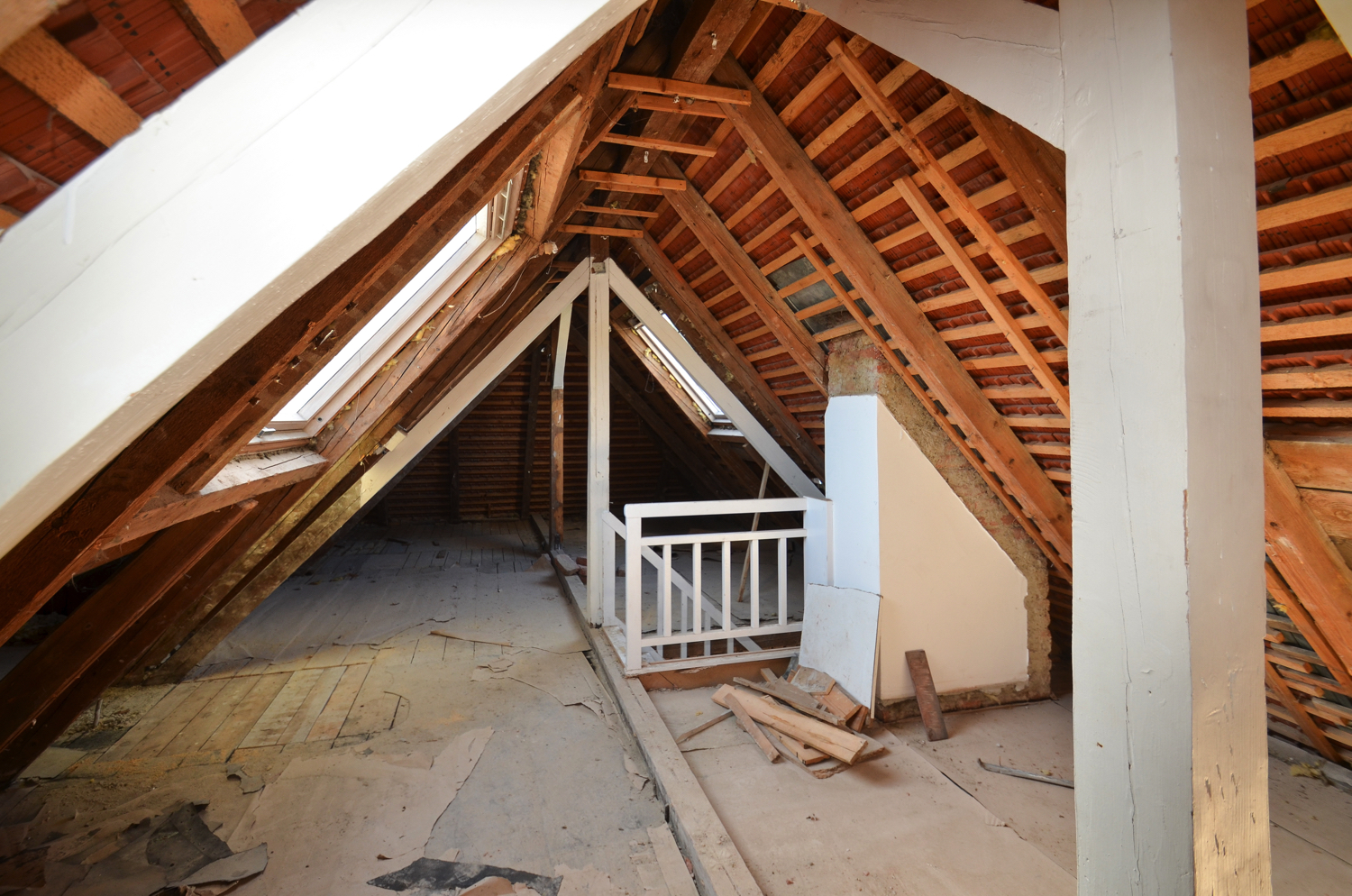
The Roof Structure: Does your roof look like an empty triangle (a traditional “cut” roof), or is it filled with a zigzag of timber frames (a modern “trussed” roof)? Trussed roofs, common in homes built after the 1960s, can be converted, but they require much more structural steelwork to safely remove the zig-zag timbers.
The Staircase Conundrum: A new staircase takes up space on the floor below. Look at your existing landing. Do you have room for a new flight of stairs above the existing ones, or will you need to sacrifice a small slice of an existing bedroom to make way?
Water Tanks and Chimneys: Is there a bulky old water tank or a chimney stack right in the middle of the space? These will need to be removed or relocated.
Why Trust Master Roofing and Home Maintenance?
A loft conversion requires tearing open the very thing that protects your home from the weather. You shouldn’t trust this to a standard indoor carpenter. You need a dedicated roofing and structural specialist.
Based locally at 64 Crowland Road, PE6 7TR, Master Roofing and Home Maintenance offers an unparalleled level of expertise for homeowners in Peterborough.
Structural Roofing Experts: We understand how to manipulate a roof without compromising its load-bearing capabilities or weatherproofing.
Seamless Exterior Finishes: We match the exterior tiles, slates, and fascias of your new dormer perfectly to your existing home.
Fully Managed Project: From the first architectural sketch to the final coat of plaster, we manage every trade, so you only ever have one point of contact.
Fully Insured & Guaranteed: We carry comprehensive public liability insurance, and all our structural work is backed by robust guarantees and official Building Control certification.
Frequently Asked Questions (FAQs)
1. How long does a loft conversion take to complete? A standard rear dormer conversion typically takes between 6 to 8 weeks from the day the scaffolding goes up to the final lick of paint. A simpler Velux conversion can be completed in around 4 to 5 weeks.
2. Will I have to move out while the work is being done? No. Because we strive to do the heavy structural work from the outside via the scaffolding, the disruption to your main living space is kept to an absolute minimum until it is time to knock through and install the staircase.
3. Does a loft conversion make the rest of the house cold? Actually, the opposite is true! Current 2026 building regulations demand incredibly high levels of thermal insulation. By heavily insulating your new roof space, you are essentially putting a thick, warm hat on your entire house, which can often reduce your overall heating bills.
4. Can you convert a loft in a modern new-build house? Yes. Modern homes use “trussed” roofs (the zig-zag timbers). While they look impossible to convert, structural engineers can design a framework of steel beams to take the load, allowing us to safely cut away the internal zig-zags and open up the space.
5. What is the minimum ceiling height for a loft conversion? Building regulations don’t specify a legal minimum ceiling height for habitable rooms, but for the room to be practical and comfortable, you want to aim for a finished head height of at least 2.0 metres over the main walking area.
6. Do I have to upgrade my boiler for a loft bathroom? It depends on your current system. If you have an older combination boiler, it may struggle to push hot water up to a third floor with sufficient pressure. We will assess your plumbing capacity during our initial site survey and advise if an upgrade or an unvented cylinder is required.
7. Is a loft conversion a good investment? Without a doubt. Not only does it vastly improve your daily living experience, but adding a functional bedroom and en-suite routinely adds significant value to Peterborough properties, often exceeding the initial cost of the build.
Ready to Transform Your Loft?
Don’t let your valuable roof space go to waste. Whether you are dreaming of a sunlit home office, a vibrant playroom for the kids, or a peaceful master bedroom away from the noise, we have the structural expertise to make it a reality.
At Master Roofing and Home Maintenance, we take the stress out of home extensions. From planning permissions to the final plastering, we handle it all with precision, transparency, and expert local knowledge.
Call our friendly team today on 03301 339819 or 07426 293716, or reach out online to arrange your free, no-obligation site survey and feasibility check. Let’s unlock your home’s true potential!